
Pahrump City Directory Collections
This historical-directory research has an important limit: no official online catalog run for local directories, reverse directories, or criss-cross directories was located. The documented evidence is narrower. Nye County History Project material refers to a March 1964 Pahrump telephone directory and to a first Pahrump Valley telephone directory dated March 6, 1965. Those references are useful dated name trails, but they do not establish an annual series. Ask the repository before treating either item as a complete household list.
| Collection | Years | Where Held | Access |
|---|---|---|---|
| Pahrump telephone-directory reference | March 1964 | Nye County History Project historical volumes | Online project material; ask about the original or a copy |
| First Pahrump Valley telephone directory cover | March 6, 1965 | UNLV Nye County Photograph Collection, PH-00221, folder 18 | Finding aid online; confirm reproduction and reading-room access |
| Pahrump oral histories, documents, and census material | Census material, 1870-1940 | Nye County History Project and named partner repositories | Discovery source; retain the collection and interview citation |
| Pahrump photograph subseries | 1910-1990 | UNLV Nye County Photograph Collection | Repository finding aid and staff-assisted archival access |
The collection names above are starting points, not a promise that every name or address can be found online. The Pahrump Community Library can help with catalog research, and the museum, library, history project, or UNLV can clarify whether an uncataloged binder, microform item, obituary file, or telephone book is available. Note: A dated listing is a historical lead, not confirmation of a present address.
Pahrump Directory Phone-Book Clues
The March 1964 and March 6, 1965 references have unusual local value because telephone service itself arrived on March 6, 1965 with 76 subscribers, according to the Hafen oral-history chronology. Before that, the settlement had only a radio telephone. A name found in either early reference can help a family historian choose the next source, such as a photograph folder, oral-history transcript, newspaper notice, deed record, cemetery inquiry, or census record. It does not show a full population, a legal residence, or a current phone number.
The Nye County History Project preserves the local-history route behind these telephone-directory references.
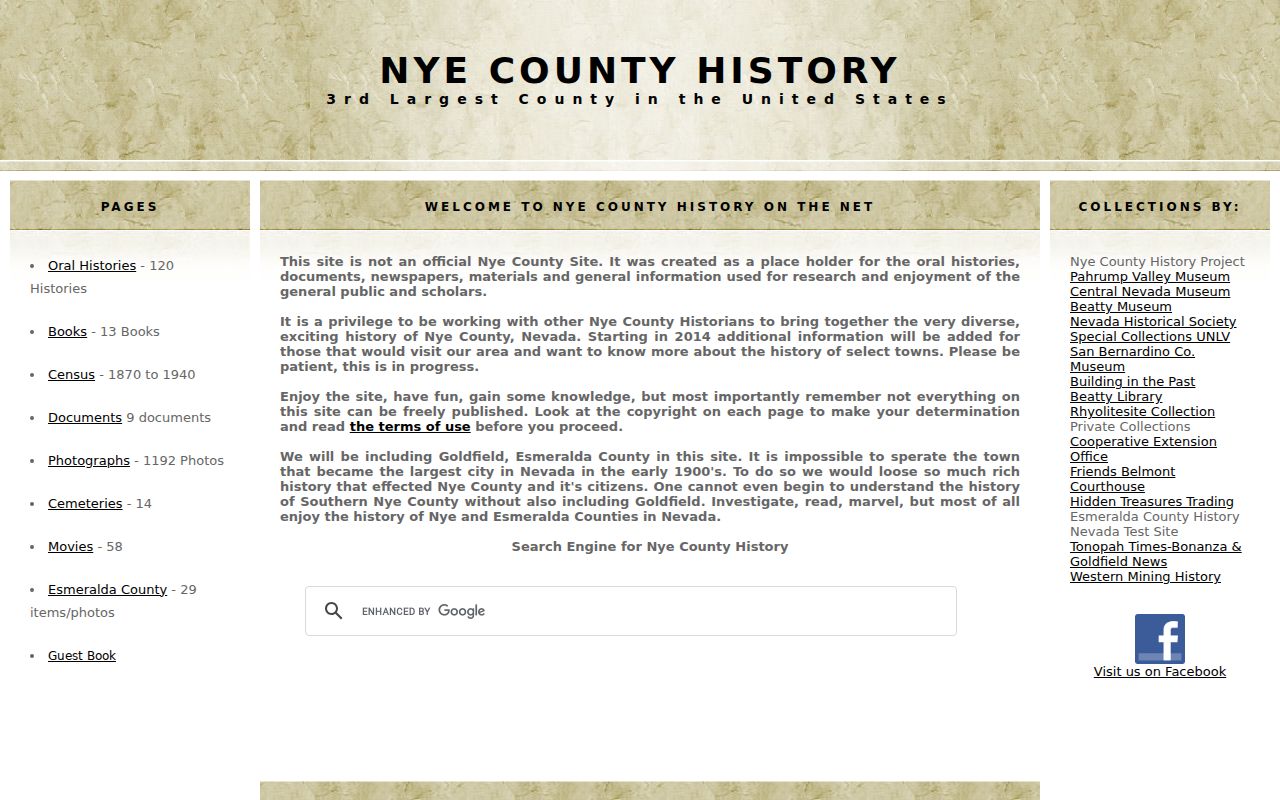
Its history pages provide a useful way to connect an early Pahrump name with oral histories, photographs, local institutions, and the source date that supports the clue.
Record the exact printed date, volume or folder, and the form of the name. An older listing may use initials, a nickname, a ranch name, or a spelling that differs from a later record. Keep the original wording when sending a question to a repository. That approach makes it easier for staff to check a shelf item without converting a tentative lead into a claimed identity.
Pahrump Directory Library Route
The Pahrump Community Library is the first local contact for historical-directory questions. Its collection emphasis includes Nevada nonfiction and genealogy nonfiction. The library help material says Nye residents may obtain free cards and that staff can assist with catalog research. It also accepts public-record requests through the Library Director and form. For an old name search, give staff a date range and say whether the question concerns telephone books, obituary files, cemetery material, local-history binders, or microform.
The library’s current information page documents the Pahrump Community Library as a local research contact.
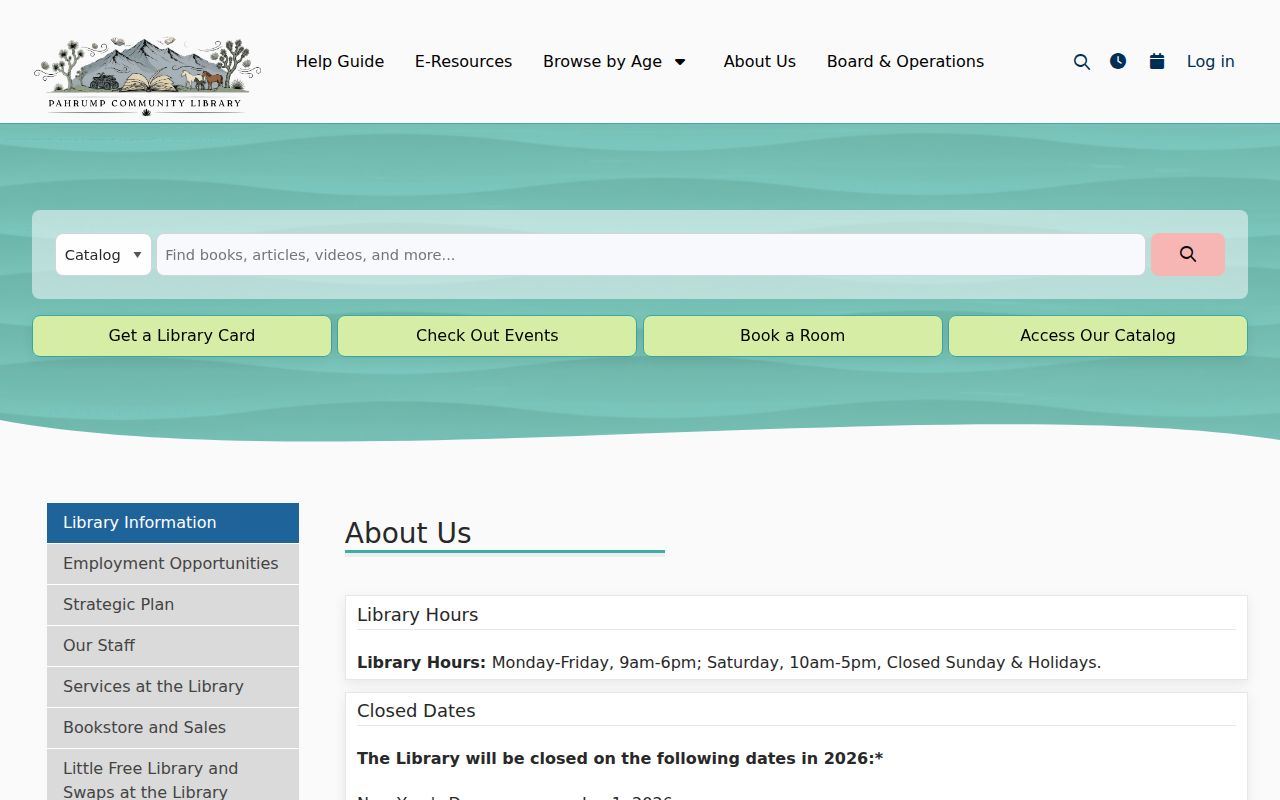
The library is a practical bridge between a Pahrump historical-directory question and the wider archive, especially when the desired item is not exposed in an online catalog.
The library’s own history explains why its collections matter. An informal library shared Post Office space with 27 families in 1955. A mobile-library model followed in 1974, an old jail became a library in 1978, a district formed in 1984, the Calvada location opened in 1993, and the present building opened in 2001. Those changes can help interpret old notices, photographs, and references to earlier library locations.
| 1955 | An informal library served 27 families through Post Office space. |
|---|---|
| 1978 | An old jail was converted for library use on February 1. |
| 1984-2001 | A library district formed, Calvada opened in 1993, and the present building opened in January 2001. |
Reading Pahrump City Directory Evidence
There is no verified Pahrump city-directory run from which to copy a standard entry format. Do not assume that a Pahrump item will contain an occupation, spouse notation, owner mark, or street-order section. Instead, identify what the actual item shows and preserve its context. A telephone directory, oral-history transcript, photograph caption, newspaper notice, and cemetery file each serve different purposes. The first may connect a subscriber to a date, while a caption identifies an image subject and an oral history records a narrator’s recollection.
| Exact title and date | Establish which Pahrump directory-like item was consulted and when it was published. |
|---|---|
| Name as printed | Preserve initials, spelling, nickname, or organization wording for a later archive search. |
| Repository and identifier | Keep the project page, collection name, folder number, or other citation with the finding. |
| Record type | Label it as a phone directory, photograph, oral history, newspaper item, or other historical source. |
- Criss-cross directory
- A directory arranged by street or address rather than surname. No verified Pahrump criss-cross run was located.
- Householder index
- An index that groups a household at an address when a volume provides one. It is not a confirmed feature of the documented Pahrump phone books.
- Abbreviation key
- A legend printed by some directories. Photograph it when present so later readers do not guess what shorthand means.
Using Pahrump City Directories for Family History
For family history, the useful unit is a dated trail rather than a one-time name match. Start with an identified Pahrump telephone-directory reference or an oral-history name, then add only sources that answer the next question. The Nye County History Project reports census material from 1870 through 1940, as well as books, documents, cemeteries, photographs, and films. That range creates ways to place an early Pahrump family in time without pretending that annual printed volumes fill every year.
- Write down the name exactly as it appears and the date of the Pahrump item.
- Ask the library, museum, project, or UNLV whether the original item, folder, or related material is available.
- Compare the dated clue with the appropriate census decade, oral-history index, photograph caption, or newspaper source.
- Use a Recorder, cemetery, or vital-record custodian only for the separate question that source can answer.
- Keep the source date beside every conclusion and mark an unresolved address conversion as a gap.
A person disappearing from one historical source may have moved, died, changed a name, remained unlisted, or simply fallen outside that source’s coverage. Do not choose among those explanations without another record. When a later name needs current-record verification, use the separate resident-lookup route rather than treating a historic directory entry as current evidence.
Pahrump History at UNLV
The UNLV Nye County Photograph Collection, PH-00221, includes a Pahrump subseries dated 1910-1990. Its description includes ranches, families, a school, store, airstrip, and other community life, with named folder contexts such as Hughes, Ruud, Turner, Wiley, Ford, Hafen, and Brown/Tecopa-Pahrump. The finding aid also identifies the first Pahrump Valley telephone-directory cover in folder 18. A photograph collection can preserve names and places that are absent from a directory, but the folder context and image date remain essential.
UNLV’s Pahrump photograph collection description identifies the archival context for this local history material.
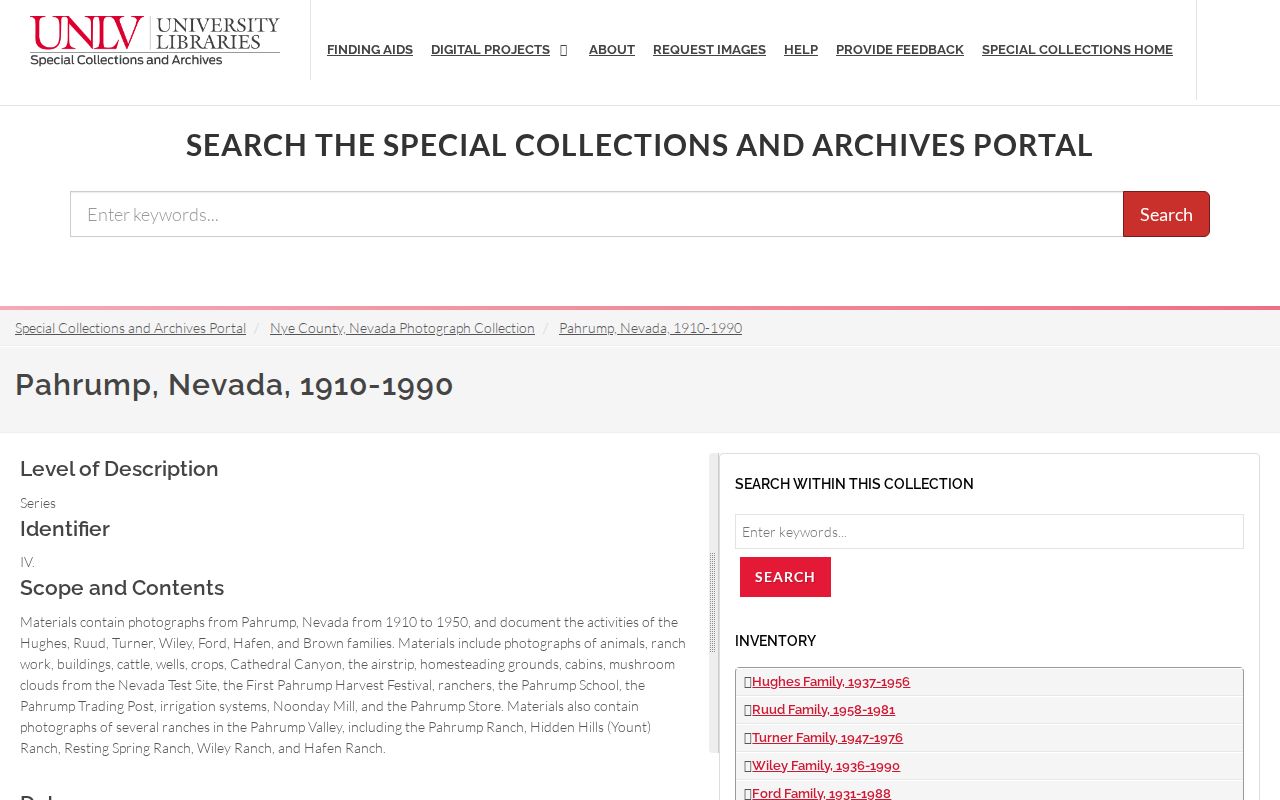
The UNLV finding aid gives a researcher a collection-level citation before requesting a folder, which is safer than treating an undated image as a complete directory entry.
UNLV Special Collections, the Nevada State Library and Archives, and the Nevada Historical Society Research Library provide regional fallback routes when a local search ends at a reference rather than an accessible item. The Nevada Historical Society Research Library reports a temporary renovation closure from January 2025 through December 2026, with research requests directed to staff during that period. Note: Check repository access rules and reproduction limits before relying on a digital preview or ordering a copy.
Pahrump Museum Follow-Up
The Pahrump Valley Museum and Historical Society fills a different role from an official records office. Established in 1991 by Harry “Button” Ford and Charles Gallivan, it preserves local material around early farming and mining, the Old Spanish Trail, pioneer life, Native artifacts, and historic buildings. Its holdings are useful for checking old business names, school groups, family associations, photographs, and community terms that appear in a local historical search.
The museum’s official town page provides the collection and visitor information for historical follow-up.
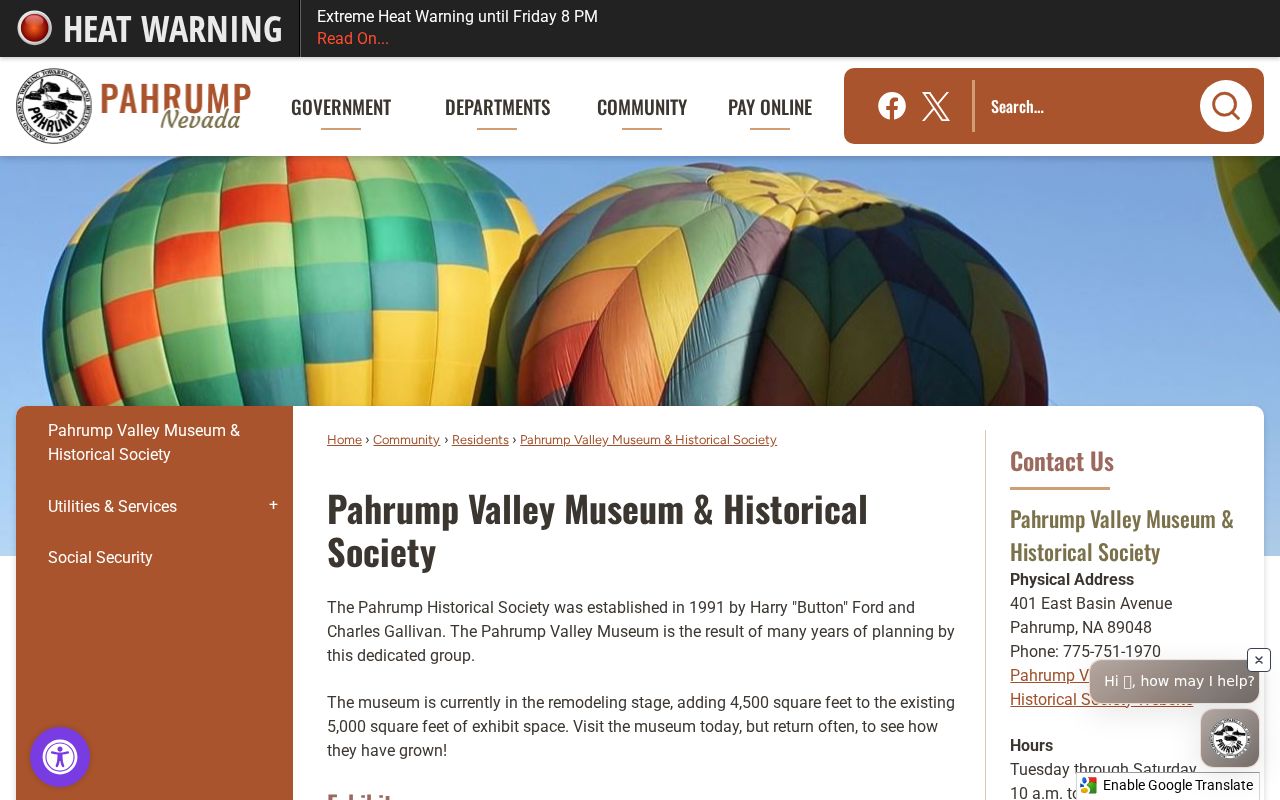
Museum material can add local context to a dated name or telephone-directory reference without converting that context into proof of present identity.
For a deceased person or an old family connection, Chief Tecopa Cemetery is another local lead, but no official online interment-name search was located. Contact the town or cemetery office with a name, date range, or plot information if known. Pair an obituary with a cemetery or vital source where possible, and label each source by its actual role.
Pahrump City Directory Archive Searches
The Nye County archive adds a civic-record layer to historical work. Its interface supports keyword, archive, time-period, and date-range searches, with Board of Commissioners agendas from 2003 onward and Pahrump Library Board material from 2011 among the documented collections. A meeting agenda may place a person in a public role or connect a library, water district, or local project to a date. It does not establish that the person was a resident.
Use the archive after a directory clue has narrowed the subject, institution, or date. Search the exact historic spelling first, then a road, ranch, organization, or family term. Preserve the agenda date, office, and role with the result. This keeps Pahrump historical research tied to the source that actually supports each historical detail.